The case for a better journey home
For people enjoying Liverpool’s nightlife or working a late shift, getting home can be expensive and difficult. When night buses did not return after the pandemic, venues, workers and audiences were left facing limited alternatives.
This research supported the campaign to restore night bus services and evaluated the subsequent N1 pilot. It brought together evidence on demand, passenger experiences and social value, showing how late-night transport can support access to work, cultural participation and more affordable journeys.
From local concerns to evidence for action
The research combined venue mapping, public consultation, surveys and stakeholder engagement to help build the case for a service. An initial survey attracted 2,600 responses, with strong support for bringing night buses back. Respondents wanted transport for both leisure and employment.
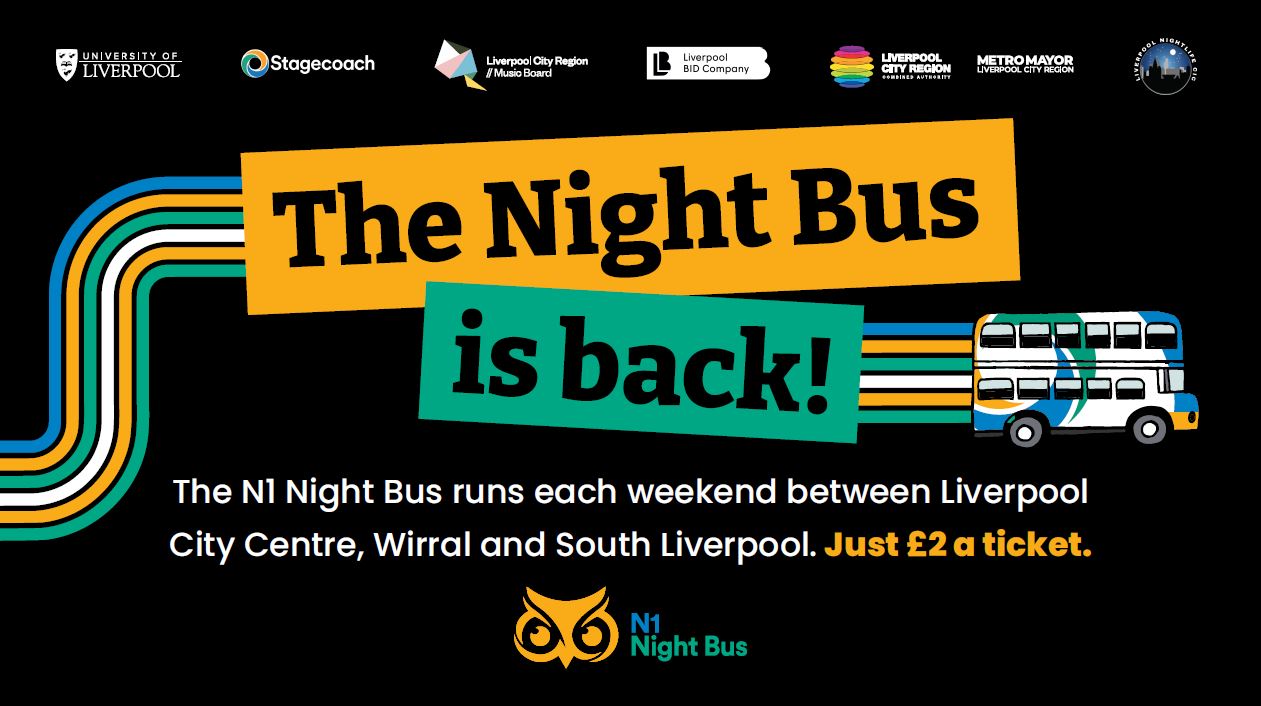
The N1 pilot launched in December 2023. By the time of the report, it had supported more than 57,500 passenger journeys. Follow-up research found that passengers valued the service for its affordability, improved feelings of safety and the opportunities it offered to work or socialise later.
However, positive experiences did not automatically translate into wider use. Limited awareness, hourly departures and restricted route coverage remained barriers. The findings pointed to a need for better promotion and service development alongside continued evaluation.
Benefits beyond the bus fare
The evaluation explored how the service affected passengers’ lives, alongside its use and operating costs.
passenger journeys supported by the time of the report
of passenger survey respondents said the bus improved their feelings of safety
estimated social value generated for every £1 invested, according to RealWorth’s analysis
Journey numbers count trips, not individual passengers. The social value estimate includes benefits such as financial savings and improved wellbeing, rather than a cash return to the operator.
Using the evidence to improve provision
The report recommends stronger promotion so more residents, students, visitors and workers know the service exists. Clear information through venues, employers and other local partners could help people plan around it.
It also proposes testing more frequent departures and extending routes to reach additional communities. Integrating night buses into wider transport planning, alongside measures to improve perceptions of safety, could help address the practical reasons people still choose other ways home.
The research gives transport partners evidence to consider alongside fare income and operating costs. By examining access to employment, affordability and passenger wellbeing, it shows how the value of night-time transport can extend across the wider community.
Authored by Richard Anderson and Mathew Flynn at the University of Liverpool’s Institute of Popular Music and MusicFutures. Social value analysis by RealWorth. Research supported by Arts and Humanities Research Council Impact Acceleration Account funding.